
A clearer Azure foundation
Addressing, subnet and traffic decisions are considered together instead of being left to individual deployments.
Shape an Azure-specific virtual network, subnet, route, security and hybrid-connectivity design for your Berwick organisation, with responsibilities and scope confirmed before implementation.
A considered discussion begins with the environment you have today.
Azure Cloud Network, with clear scope and ownership.
The local Berwick prompt provides the starting context: the workplace, relied-on applications and current technology constraints. Frame the Azure address space, subnet, route, security, hybrid-connectivity and access-responsibility questions around the estate in view.
Berwick Village's historic centre brings together retail, hospitality and community activity. The City of Casey's activity-centre planning also identifies the nearby health and education precinct as an employment hub anchored by those services and institutions.
For a business working in that setting, technology requirements can extend beyond the office desktop: dependable application access, sensitive information, connected workplaces and continuity all deserve attention. The useful question is how the whole environment supports the organisation's day-to-day work.
vCloud Group brings managed IT, cloud and hybrid infrastructure, business continuity, phones and connectivity into one service conversation. This Berwick example shows the information and options to discuss before local delivery, suitability and service scope are confirmed.
Plan an Azure Virtual Network around address space, subnet boundaries, traffic paths and the resources your organisation needs to connect. This profile is proposed for Azure-specific design discussion and is distinct from a generic virtual-network service.
This proposed profile focuses on Azure networking decisions and ownership boundaries. The final design, implementation role, access level, availability and engagement terms must be confirmed for your environment.
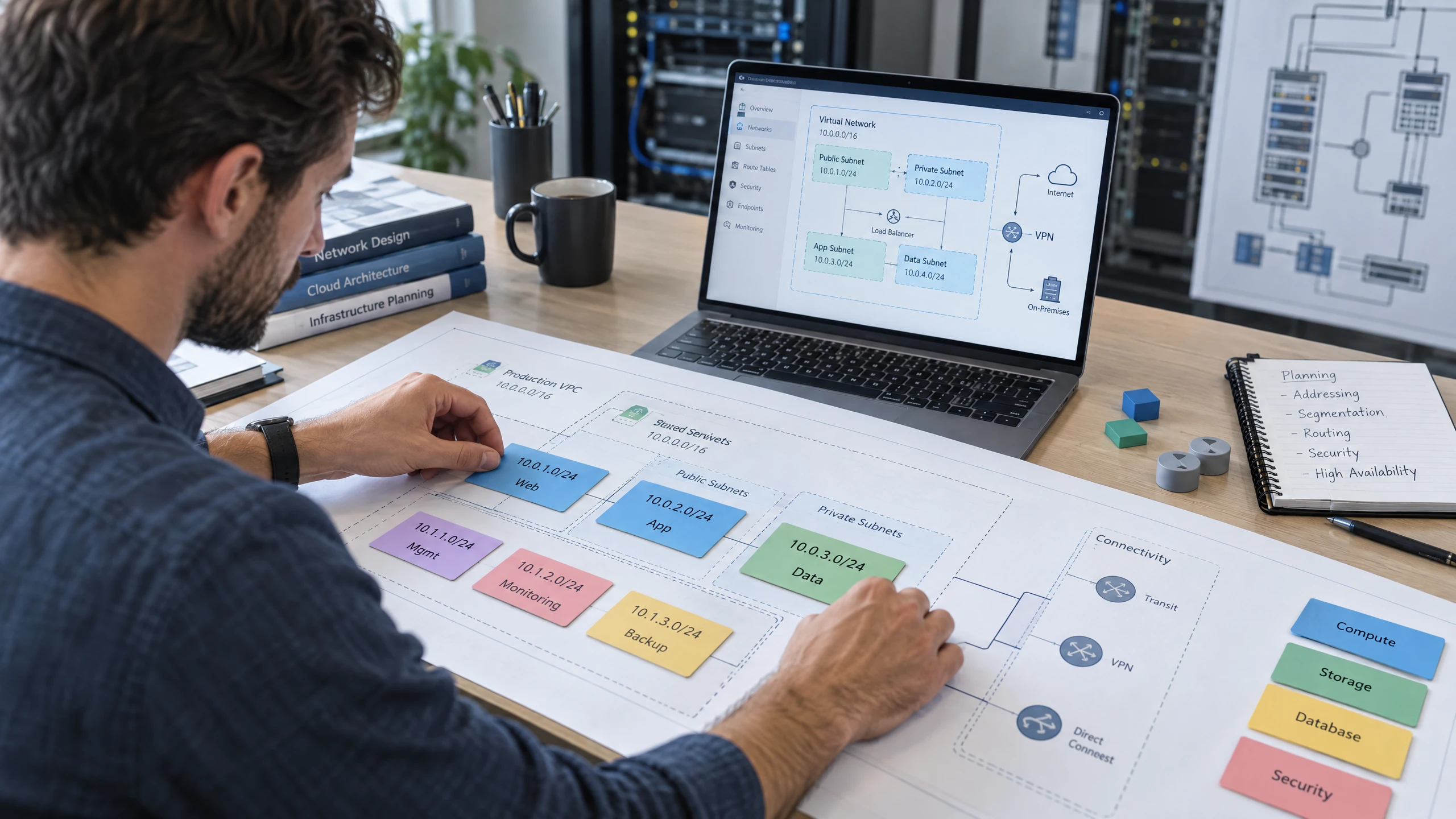
Plan Azure address space and virtual-network boundaries around the resources and connections in scope.
Review the Azure Virtual Network design, address ranges, naming and anticipated growth so Azure resources and connected networks have a considered foundation. Existing estate details and the final implementation responsibility must be confirmed.Discuss this requirement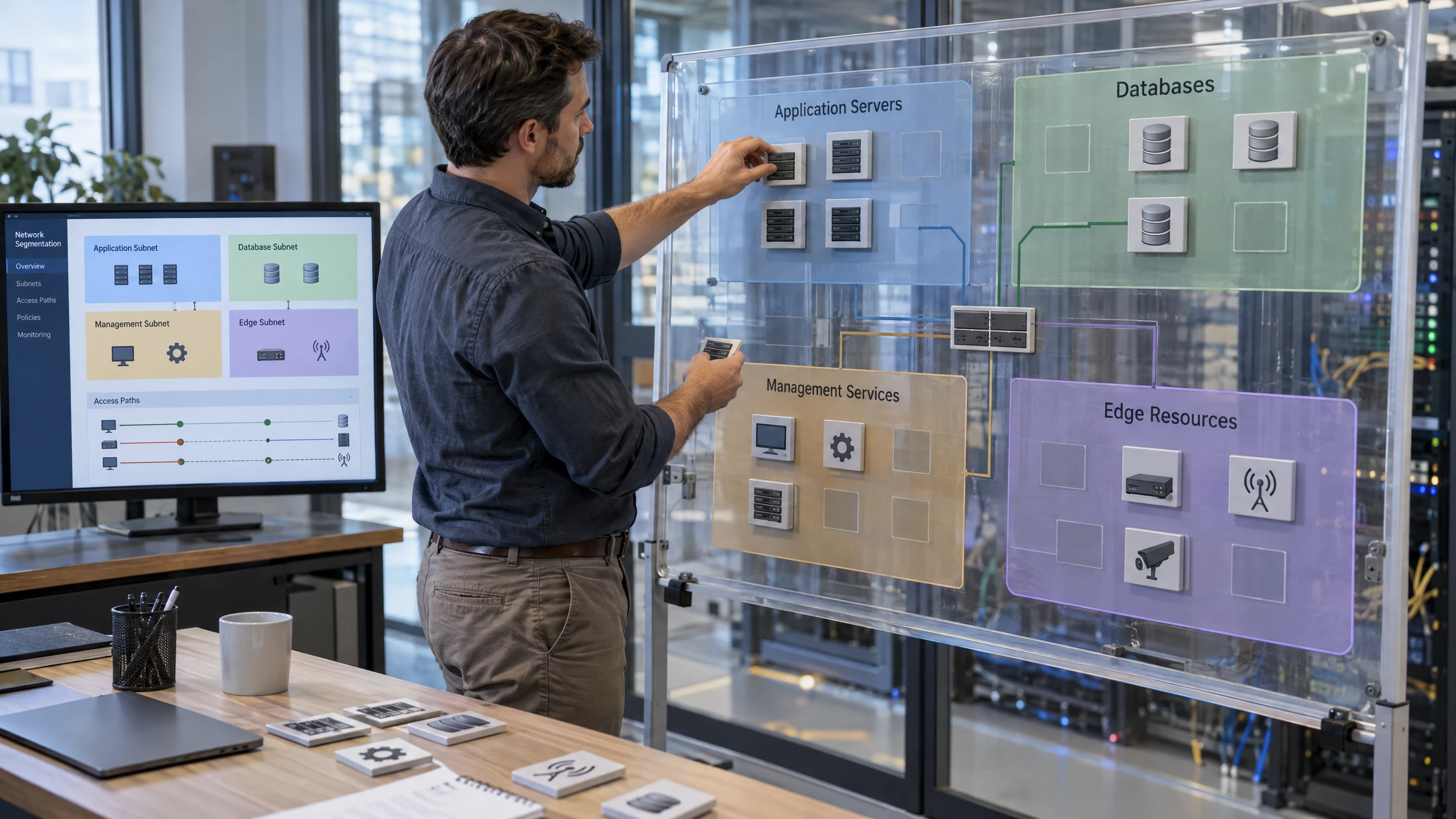
Separate workloads and network functions into subnet boundaries that reflect the proposed architecture.
Discuss subnet purpose, address capacity, workload placement and the traffic that must cross each boundary. Subnet count, delegation, service integration and deployment work are proposed items to confirm rather than assumed inclusions.Discuss this requirement
Map Azure and connected-network traffic paths, including where custom routing may be needed.
Review default and proposed routes between subnets, Azure resources, on-premises networks and the internet. Route tables, gateway propagation and any network virtual appliance dependency require environment-specific assessment and confirmation.Discuss this requirement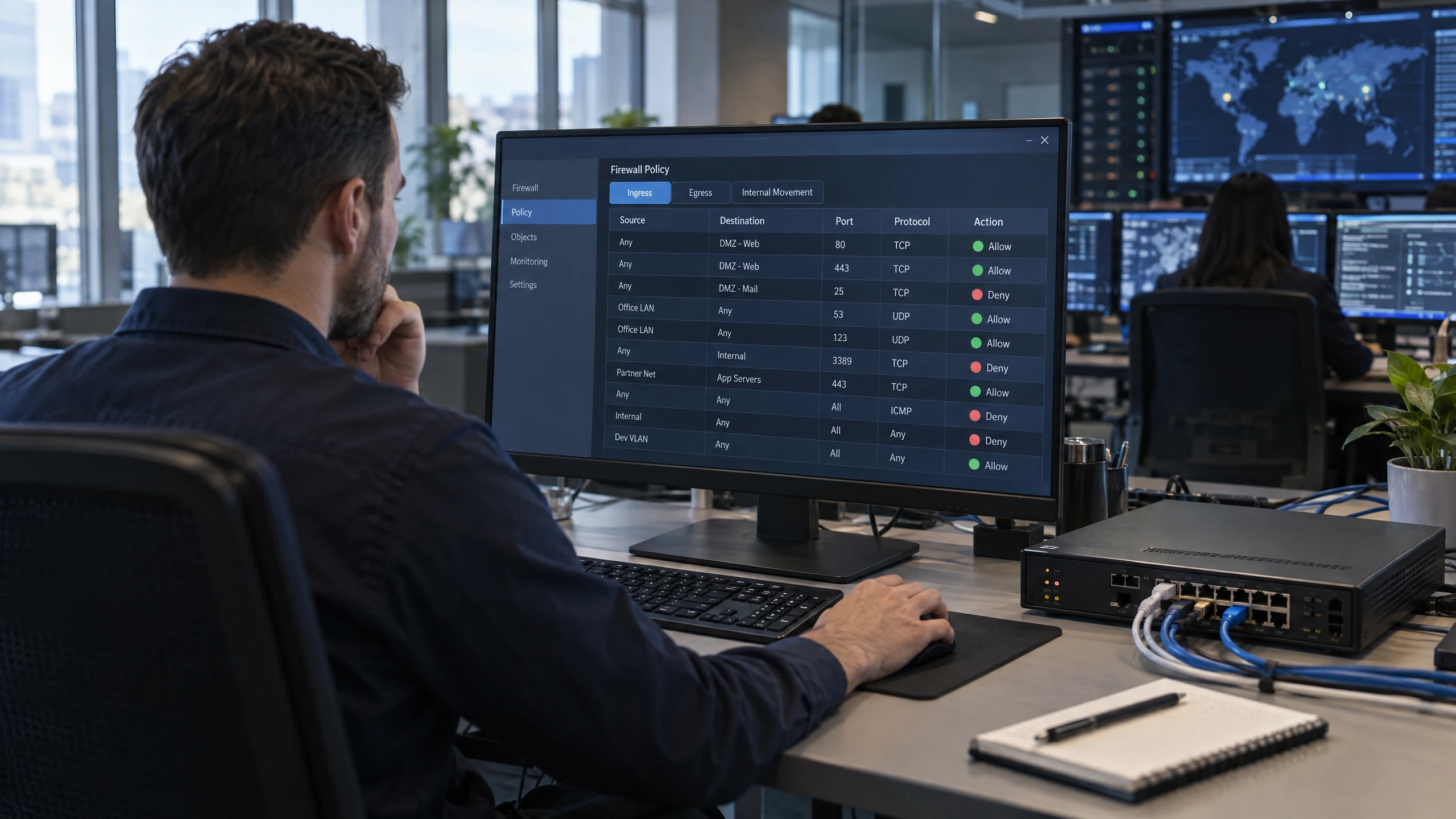
Design security-rule boundaries for traffic entering, leaving and moving across the Azure network.
Consider network security groups, application security groups, permitted sources and destinations, ports, protocols and any firewall or network virtual appliance boundary. The exact rules, monitoring and operational owner must be confirmed before implementation.Discuss this requirement
Assess how Azure should connect with an office, data centre or other authorised network.
Azure supports site-to-site VPN, point-to-site VPN and ExpressRoute scenarios; the suitable option depends on topology, traffic, security, carrier arrangements and operational ownership. No connectivity service, partner arrangement or performance outcome is included by this profile.Discuss this requirement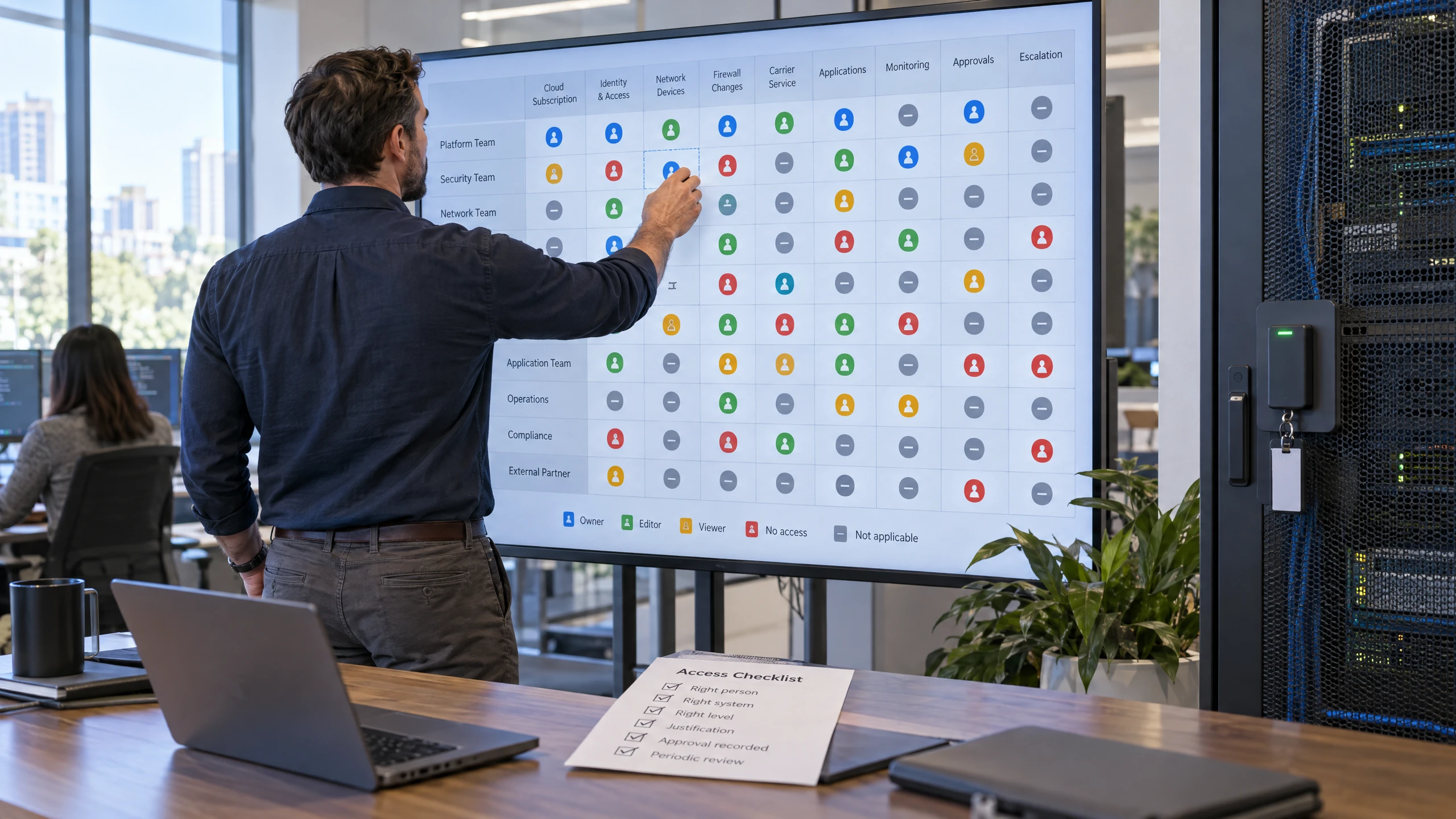
Document who controls Azure, network devices, identity, applications and provider escalations.
Create a proposed responsibility view covering subscription and resource access, network-rule changes, credentials, approvals, monitoring, incident coordination and third-party boundaries. Administrative access and any ongoing support arrangement require explicit agreement.Discuss this requirementBring the detail that affects your people, systems and decisions into one practical discussion.
Addressing, subnet and traffic decisions are considered together instead of being left to individual deployments.
The proposed design makes traffic controls, permitted paths and security ownership easier to discuss and review.
On-premises and Azure connectivity options can be compared against the organisation's topology, requirements and provider boundaries.
A responsibility plan helps distinguish vCloud's proposed role from customer, carrier, Microsoft and other provider responsibilities.

An Azure Cloud Network design should start with the organisation's workloads, address space, Azure resources and existing locations. Subnets can then be shaped around workload and security boundaries, with traffic paths documented between subnets, connected networks and the internet rather than assumed from a generic virtual-network pattern.
Microsoft Learn identifies Azure Virtual Network capabilities including traffic filtering, custom route tables, communication with on-premises resources and VPN or ExpressRoute connectivity. Those are Azure platform functions, not evidence that vCloud has configured them for this organisation; the proposed topology, subscription access, implementation tasks and third-party dependencies must be confirmed.
Where a hybrid design is contemplated, the architecture should record the customer-owned network, Azure resources, carrier or connectivity provider, identity dependencies and escalation path. Any availability, region, performance, failover, monitoring or recovery expectation remains subject to the agreed design and provider terms.
Different working environments bring different systems, rhythms and priorities into focus.

Online orders, fulfilment and customer communication span several systems. Consider staff access, integrations and business continuity while clearly distinguishing workplace support from the online store and marketplace platforms themselves.
Read perspective
Dispensing platforms, stock systems and counter connectivity have distinct support responsibilities. Consider the surrounding network, staff access and recovery arrangements while keeping specialist pharmacy software support clearly defined.
Read perspective
Policy records, client communication and specialist platforms should be considered as one working environment. Discuss access and recovery priorities while confirming professional obligations and keeping insurance-platform responsibilities separate from general IT support.
Read perspectiveFeedback from our clients.
I consider myself very fortunate to be able to partner with Trevor and his team at vCloud to address all of my IT needs as well as keeping me proactively aware of technology changes to best protect my practice and my clients. Trevor is extremely passionate about providing best practice results.
Azure networking can cross several operational boundaries. A useful support discussion identifies who owns the Azure subscription, resource configuration, identity and privileged access, as well as the office firewall, internet service, carrier circuit, devices and applications that depend on the network.
This profile does not establish managed monitoring, 24/7 response, a service level, guaranteed resolution, recovery outcome or ongoing Azure administration. Those arrangements, if suitable, should be separately described and confirmed for the Berwick organisation before work or access is provided.
vCloud's supplied public material supports cloud, virtual-network, multi-site connectivity, security and provider-coordination conversations. It does not verify an Azure-specific product inclusion, Microsoft partnership or certification, so Azure scope, credentials, implementation ownership and local availability must be confirmed in the proposal.
Remote support for Azure Cloud Network helps your Berwick team work through service questions and issues without needing an office visit.
You can access Level 1–4 support engineers for help with your Azure Cloud Network requirements, from initial troubleshooting through to more involved technical investigation.
If the work needs a hands-on response, the remote engineer can escalate it to an on-site engineer for a visit to your office in Berwick.
Appointment, scope and access can be confirmed when you contact us.


We can visit your office in Berwick when Azure Cloud Network work needs hands-on attention. Our engineers are in and around the area daily.
Same-day visits can be booked for urgent support issues, with next-day support for issues that can wait. We confirm the appointment, scope and access arrangements when you contact us.
Whether the hand-off starts remotely or on site, the discussion can stay focused on the work in front of your team.
Appointment, scope and access can be confirmed when you contact us.
Visits focus on your Azure Cloud Network requirements. The work, responsibilities and ongoing support are agreed with your team.
Tell us what you need. We’ll help you understand the options and decide what comes next.
Use the enquiry form to tell us about your requirements.
Share the issue you’re facing, what you want to improve and any systems already in place.
We discuss your current setup, the people it needs to support and any practical requirements.
We explain suitable options and discuss the scope so you can decide how to proceed.
Straightforward answers to help you understand your options.
It would consider Azure virtual-network address space, subnets, routes, security controls, hybrid connectivity and access responsibilities. This is a proposed Azure-specific design discussion, so scope and terms must be confirmed before any work or ongoing service is provided.
Subnet boundaries, address capacity, workload placement and traffic paths can be reviewed together, including routes between Azure resources, connected networks and the internet. The required rules, route tables, deployment tasks and responsible administrator depend on your environment and must be agreed in advance.
Azure supports site-to-site VPN, point-to-site VPN and ExpressRoute options. The right approach depends on your network, traffic, security needs and carrier arrangements; any connectivity service, provider involvement and performance requirements need to be agreed separately.
Document who controls the Azure subscription, identity and privileged access, network rules, customer approvals, firewalls, carrier services, monitoring and applications. vCloud’s role, administrative access and any ongoing support arrangement require explicit agreement before work begins.
This proposed scope is specifically about Azure virtual-network architecture, subnet and route design, Azure security controls, hybrid connectivity and responsibility planning. It does not establish a generic network package or imply that implementation is included.
Tell us about your Azure environment and the support you need. We will confirm whether we can help, the access required, who is responsible for changes and any service commitments before work starts.
Share your Azure estate, existing network, connected locations, security requirements and ownership concerns. We can then discuss whether this proposed Azure-specific scope is suitable and confirm responsibilities, availability and next steps before work begins.