
Shared visibility
A defined contact and pipeline model can give a team a common view of customer work and next actions.
Explore a provider-neutral CRM discussion for organising contacts, pipeline activity and repeatable follow-up processes. This is a draft intended offering, so the appropriate platform, delivery scope and ongoing responsibilities should be confirmed before work begins.
A considered discussion begins with the environment you have today.
CRM, with clear scope and ownership.
For Richmond, begin with the local prompt’s user count, server and desktop context, and reported issue. Use the current enquiry-to-customer process to clarify contact records, pipeline stages, ownership and follow-up workflow requirements.
Bridge Road is one of Richmond’s commercial precincts, with retail, food and drink businesses alongside heritage architecture.
Swan Street runs from Punt Road to Burnley Park, bringing food and nightlife venues close to the Melbourne Sports and Entertainment Precinct.
Map how enquiries, contacts, opportunities and follow-ups move through your team, before choosing a configuration or delivery approach.
These are general CRM platform functions and planning areas to discuss, not guaranteed vCloud delivery inclusions or support for a named product.

Plan the people, organisations, fields and ownership details a CRM may need.
Review the information your team actually uses, including required fields, record responsibilities and practical naming rules. Keep the model focused on the customer process rather than assuming a product-specific setup.Discuss this requirement
Translate opportunity or enquiry stages into a clear, shared process.
Define meaningful stages, entry and exit criteria, next actions and visibility needs so the team can discuss a pipeline that reflects how work is handled.Discuss this requirement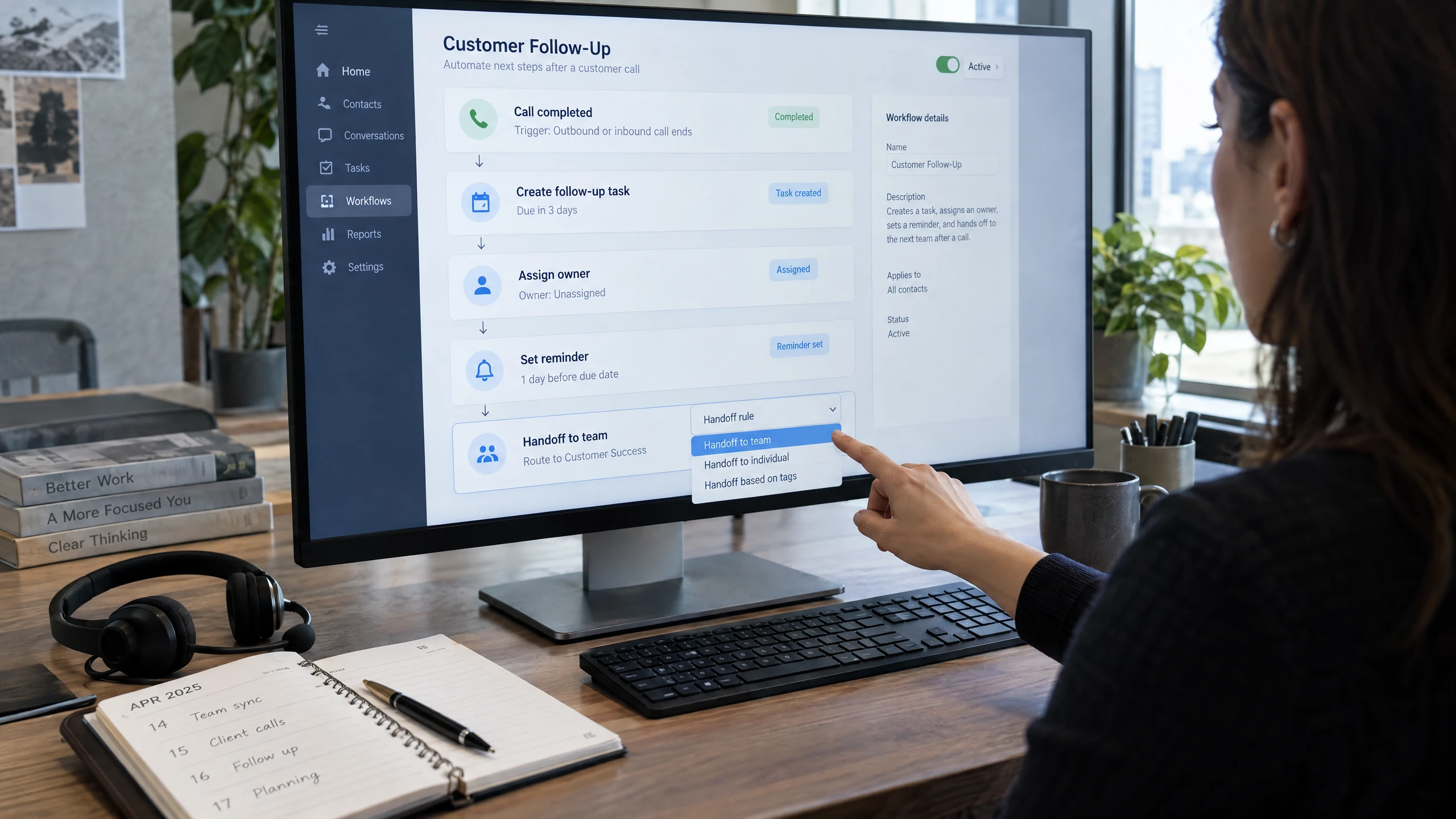
Identify repeatable tasks, reminders and handoffs for customer follow-up.
Document when a task should be created, who owns it and what completion looks like. Any automation, notification or workflow implementation remains subject to confirmed scope and platform fit.Discuss this requirement
Consider views and reports that help teams understand activity and pipeline movement.
Start with decisions the team needs to make, such as outstanding follow-ups or stage distribution, then assess which reporting functions the selected platform can provide.Discuss this requirement
Plan user roles, record visibility and sensible handling of customer information.
Discuss who needs access, what should be restricted and which internal policies apply. Security, compliance and data-handling outcomes must be reviewed for the specific environment rather than assumed.Discuss this requirement
Prepare practical conventions and guidance so the process is usable day to day.
Agree on naming, ownership, stage definitions and review habits before considering any training or assistance. Ongoing management, product licensing and implementation responsibilities are scope questions.Discuss this requirementBring the detail that affects your people, systems and decisions into one practical discussion.
A defined contact and pipeline model can give a team a common view of customer work and next actions.
Documented stages, tasks and handoffs can reduce reliance on individual memory and informal processes.
Starting with process questions helps separate essential CRM needs from optional product features.
An early discussion can surface access, data, training and responsibility questions before any platform decision is made.
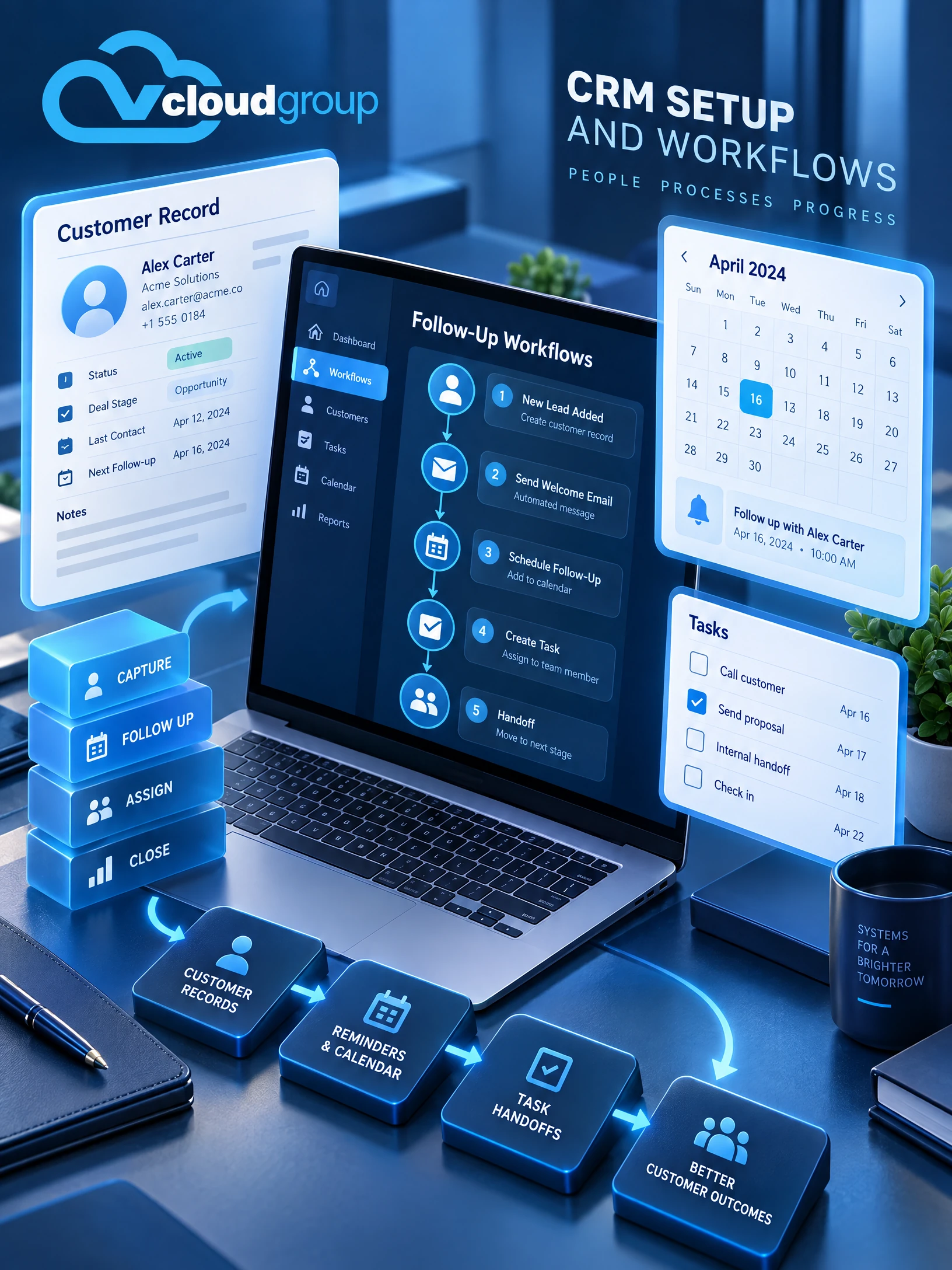
A useful CRM approach begins with the operating process: where enquiries arrive, what information must be captured, how work is assigned, which stages matter and how follow-up is reviewed. For your team, this creates a practical brief without presuming a particular CRM vendor, integration or delivery model.
The eventual arrangement may involve contact records, pipeline views, tasks, permissions and reporting, but each element depends on the selected platform, existing data, team practices and confirmed scope. Product capability is described here as a general consideration; no vCloud certification, partnership, migration, licensing resale or integration is implied.
Different working environments bring different systems, rhythms and priorities into focus.

Bring matter files, document management and secure team access into one plan. A legal practice needs its business applications and underlying network to work together, with recovery priorities clear when a system is unavailable.
Read perspective
Staff, trainers and learners may need different access to shared tools. Consider classroom connectivity, workplace systems and recoverable learning resources, with clear ownership of learning-platform support and account management.
Read perspective
Administration, production information and warehouse systems may rely on different environments. Start with the business network, access needs and outage priorities, while keeping specialised production equipment outside any assumed generic support scope.
Read perspectiveFeedback from our clients.
vCloud Support has been looking after my email and website, they have been great and very knowledgeable. Trevor and his development team also put together our website from design, implementation, through any modifications we needed.
Bring a simple outline of your current enquiry-to-customer process, the people who use it, the records you need to retain and the follow-ups that are often missed. Examples of current stages, fields or reports can help clarify the intended outcome without sharing private customer records.
Be ready to discuss the platform you are considering, access roles, data ownership, security expectations, training needs and who will maintain the process. Confirm whether setup, workflow configuration, data work, integrations or ongoing management are actually in scope; none is assumed by this draft profile.
Remote support for CRM helps your Richmond team work through service questions and issues without needing an office visit.
You can access Level 1–4 support engineers for help with your CRM requirements, from initial troubleshooting through to more involved technical investigation.
If the work needs a hands-on response, the remote engineer can escalate it to an on-site engineer for a visit to your office in Richmond.
Appointment, scope and access can be confirmed when you contact us.


We can visit your office in Richmond when CRM work needs hands-on attention. Our engineers are in and around the area daily.
Same-day visits can be booked for urgent support issues, with next-day support for issues that can wait. We confirm the appointment, scope and access arrangements when you contact us.
Whether the hand-off starts remotely or on site, the discussion can stay focused on the work in front of your team.
Appointment, scope and access can be confirmed when you contact us.
Visits focus on your CRM requirements. The work, responsibilities and ongoing support are agreed with your team.
Tell us what you need. We’ll help you understand the options and decide what comes next.
Use the enquiry form to tell us about your requirements.
Share the issue you’re facing, what you want to improve and any systems already in place.
We discuss your current setup, the people it needs to support and any practical requirements.
We explain suitable options and discuss the scope so you can decide how to proceed.
Straightforward answers to help you understand your options.
This is a provider-neutral discussion, not confirmation of support for every CRM product. Share the platform you are considering and the customer process you want to improve so capability, availability and delivery scope can be reviewed before any commitment.
Bring an outline of your customer journey, contact fields, pipeline stages, user roles, follow-up problems and reporting needs. Use examples rather than private customer records until an appropriate way to handle that data has been agreed.
Migration is not included or implied. Existing data sources, quality, permissions, export formats and any transformation work would need to be reviewed and separately scoped.
No integration is promised. Connections to email, forms, accounting, telephony or other systems would depend on the selected platform, technical access, security requirements and confirmed scope.
Licensing resale, a product partnership and ongoing managed operation are not claimed. Any specific setup, training or management responsibility would need to be discussed and confirmed within the actual delivery scope.
CRM work concerns customer records, pipeline stages and repeatable follow-up workflows. It is separate from website development, hosting decisions and general IT support, so related responsibilities should be identified and confirmed separately.
Share the customer process you want to improve, the platform you are considering and the boundaries that matter to your team. We can first clarify requirements and whether this intended offering fits the confirmed vCloud scope.